ROSIE is Waitrose’s first user-facing AI retail assistants, designed to support Partners through voice-first interactions in live store environments.
Company
Waitrose & Partners
Timeline
2025 -
2026
Role
As the primary UX/UI designer, I led the product experience from concept to rollout.
Project overview
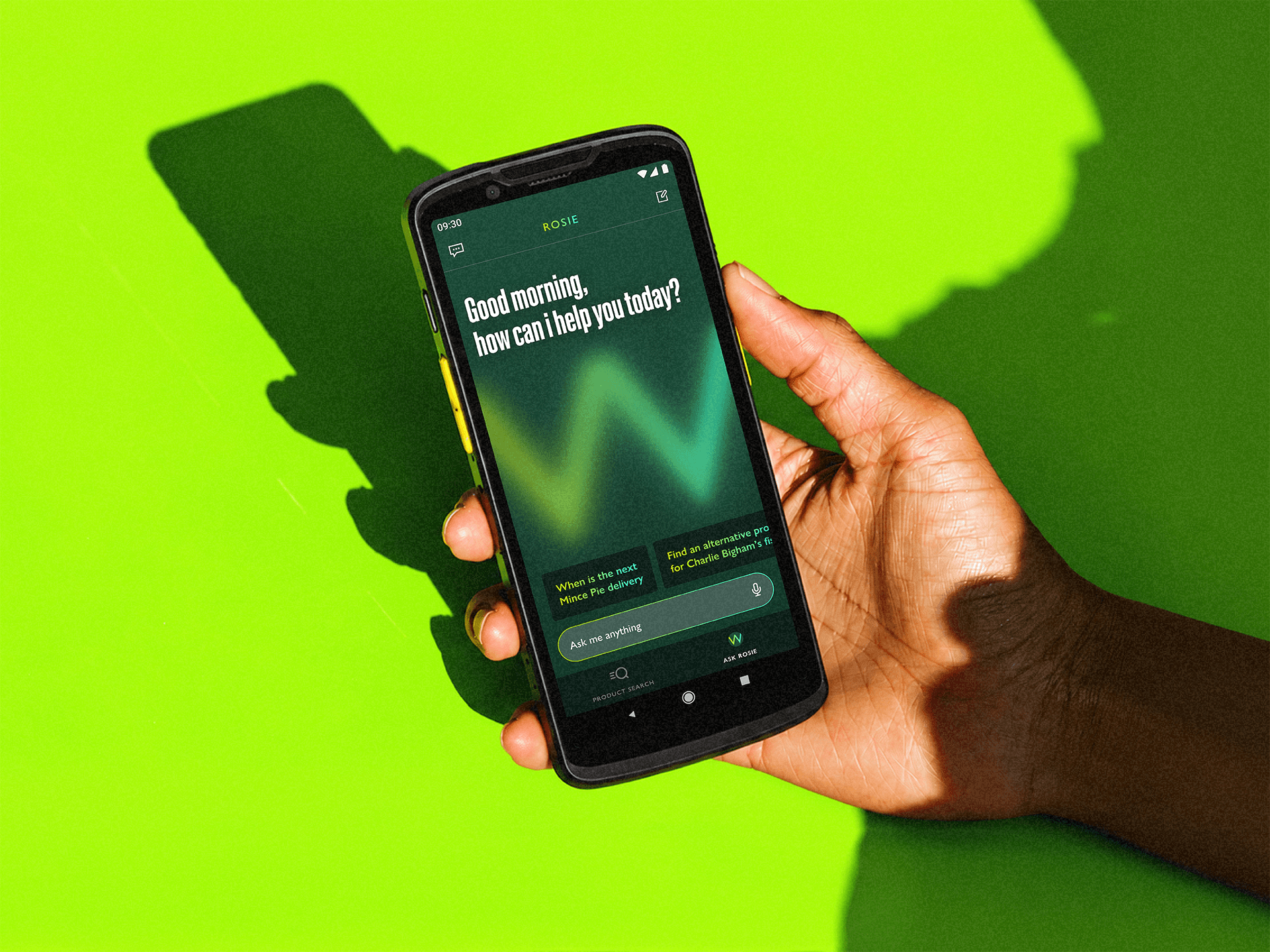
ROSIE is Waitrose & Partners’ first AI-powered retail assistant, designed to support in-store Partners through voice-first and visual interactions across headset and handheld experiences. As the Senior Product Designer and primary UX/UI designer on the project, I led the end-to-end experience across interaction design, UI design, prototyping, stakeholder presentations, and internal launch materials used to communicate the vision across the business. Working closely with UX researchers, stakeholders, and Frog; part of Capgemini Invent, I helped shape how AI-assisted retail support could integrate naturally into real store environments. Rosie was initially introduced as part of the wider Product+ ecosystem before evolving into a more defined AI assistant experience focused on operational support, product discovery, and reducing friction during customer interactions. The experience has since been released into selected concept stores, with continued iteration informed by real Partner feedback and in-store usage.
Challenges
Designing Rosie meant balancing emerging AI interaction patterns with the realities of fast-paced retail environments where speed, clarity, and usability were critical. Research and Partner feedback highlighted concerns around trust, interruption, accessibility, and how conversational AI could integrate naturally into existing workflows without overwhelming users.
While Frog and Capgemini helped shape elements of the voice architecture, my role focused on translating these behaviours into approachable UX and UI patterns that felt intuitive across both headset and handheld experiences. Much of the early design process involved rapidly exploring interaction models, conversational flows, and visual directions to help stakeholders visualise how Rosie could evolve within the wider Product+ ecosystem. As the primary internal designer working alongside Frog and Capgemini, I also helped ensure Rosie’s UX, UI, and visual identity remained authentic to the Waitrose brand while balancing the introduction of emerging AI interaction patterns.
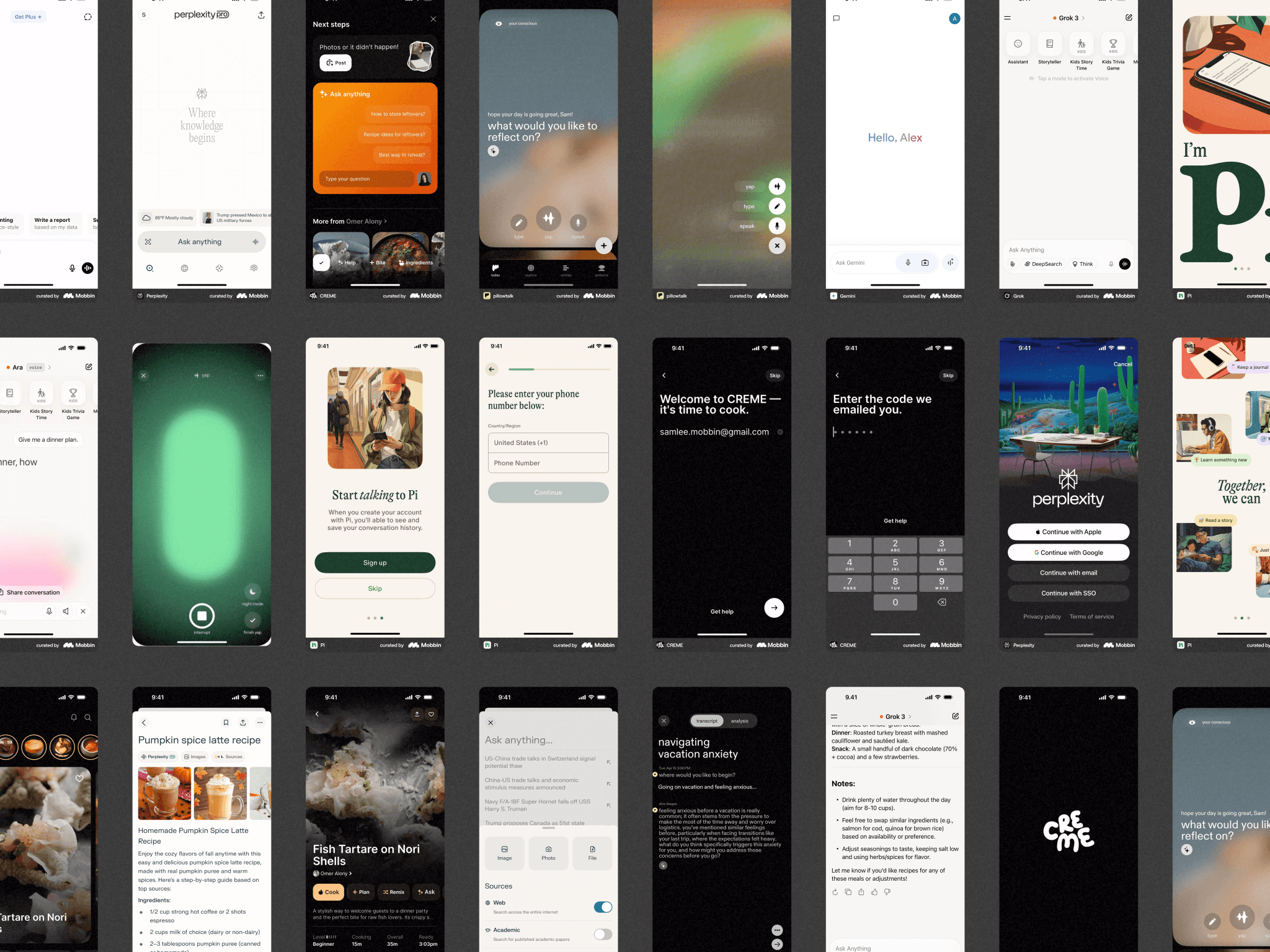
To help shape Rosie’s interaction model, I analysed a range of emerging AI assistants and conversational products to better understand common UX behaviours, onboarding patterns, and multimodal interaction approaches. These references helped inform how Rosie could feel approachable, lightweight, and operationally useful within a retail environment.
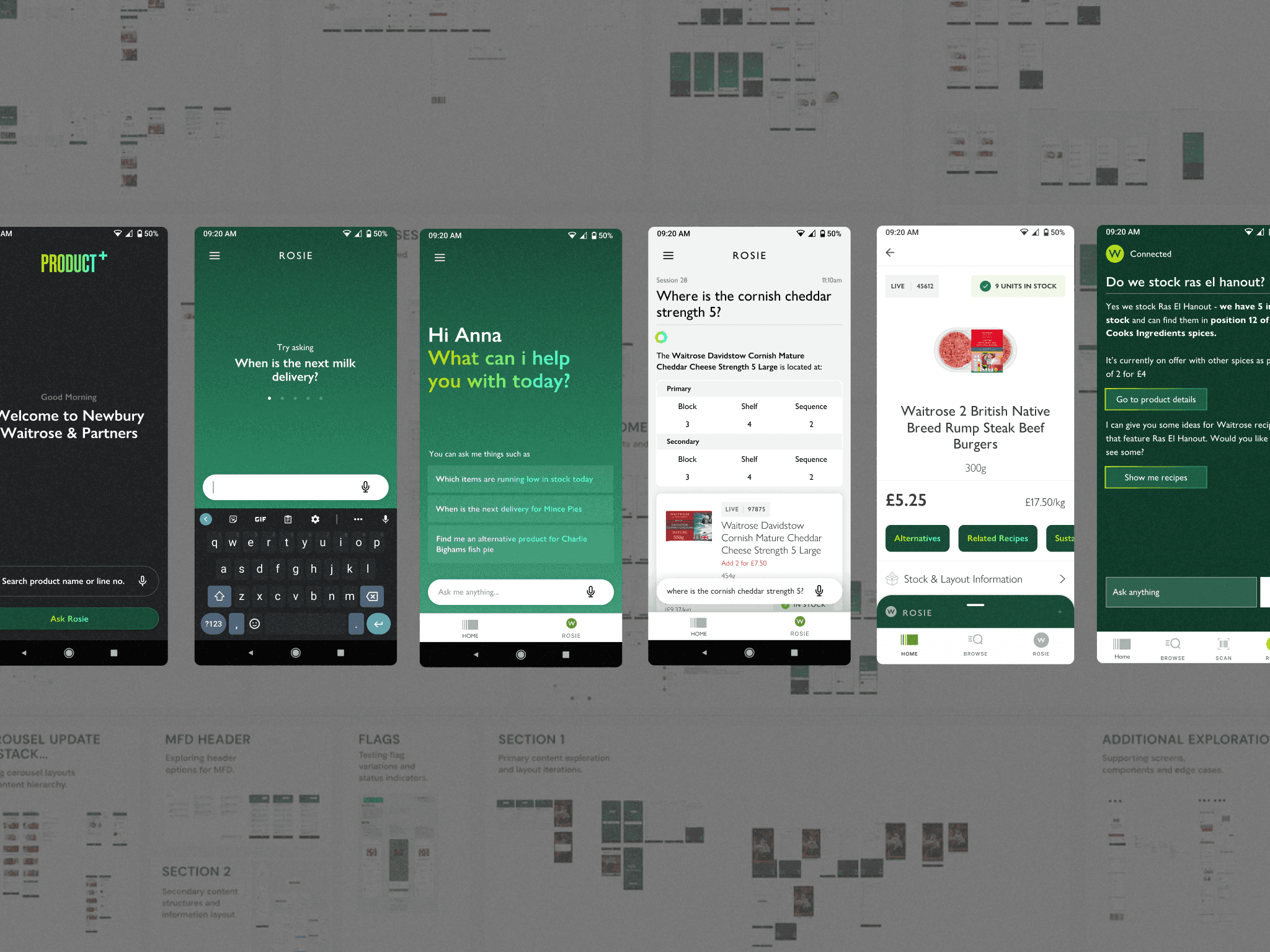
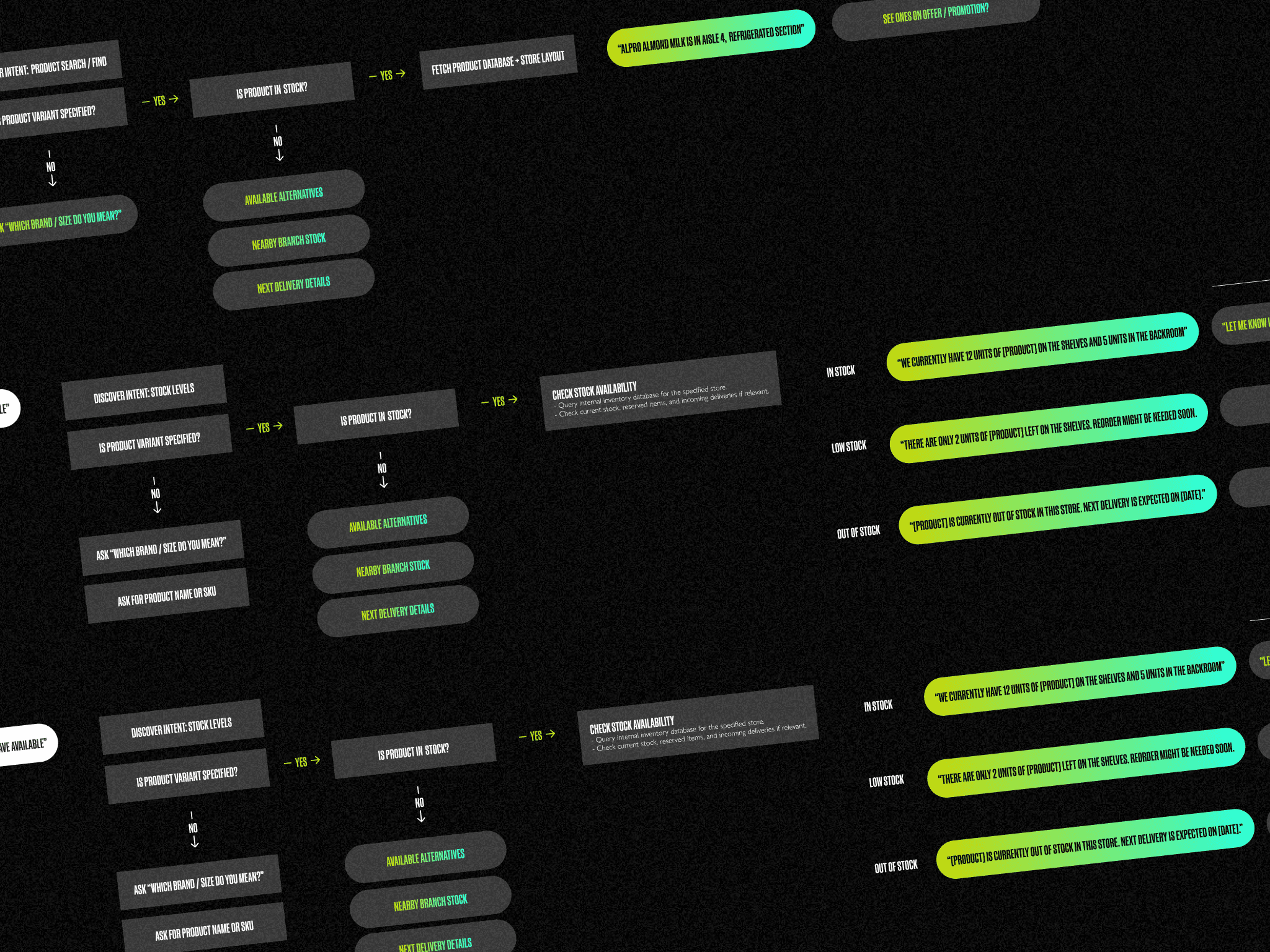
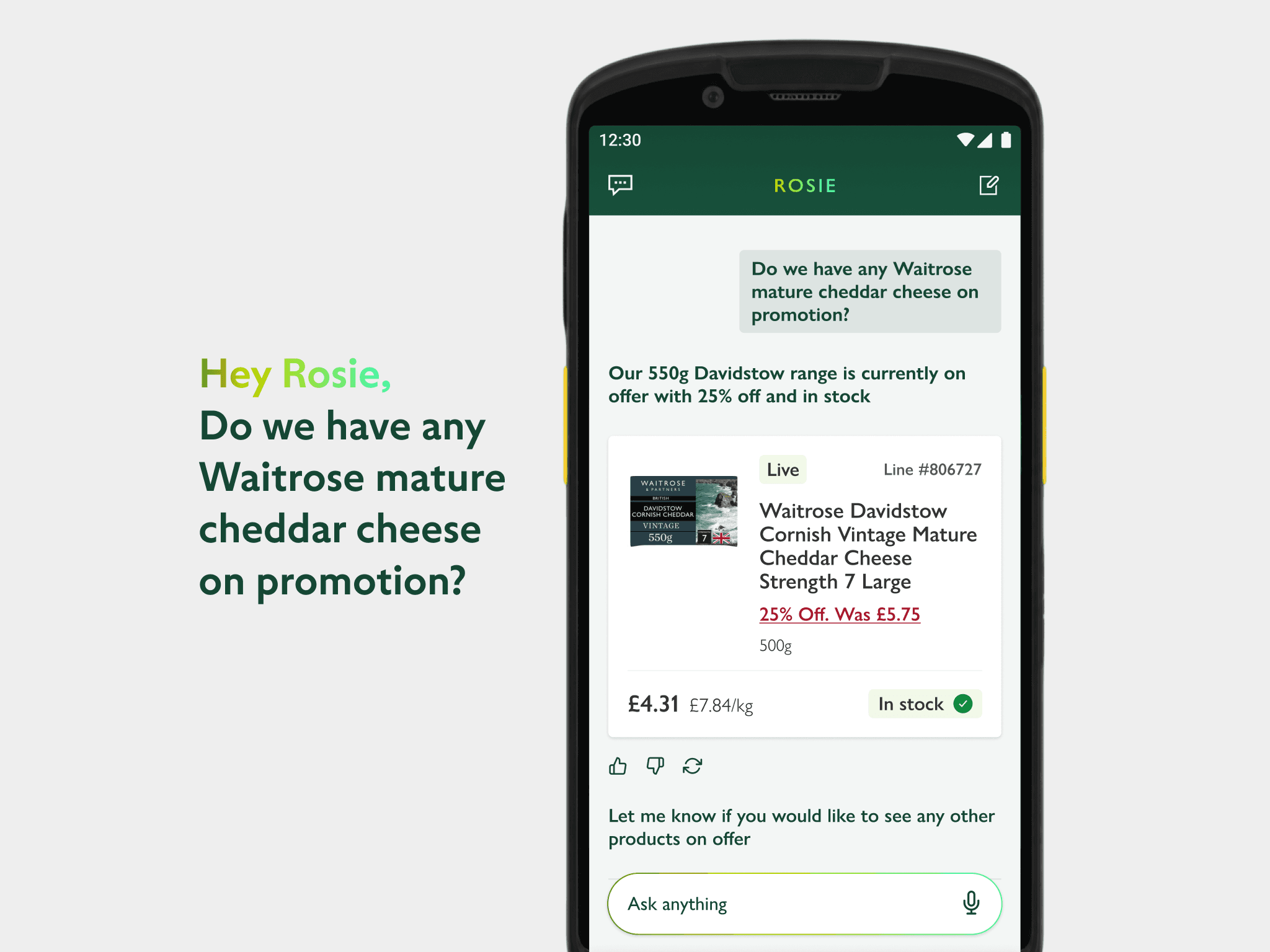
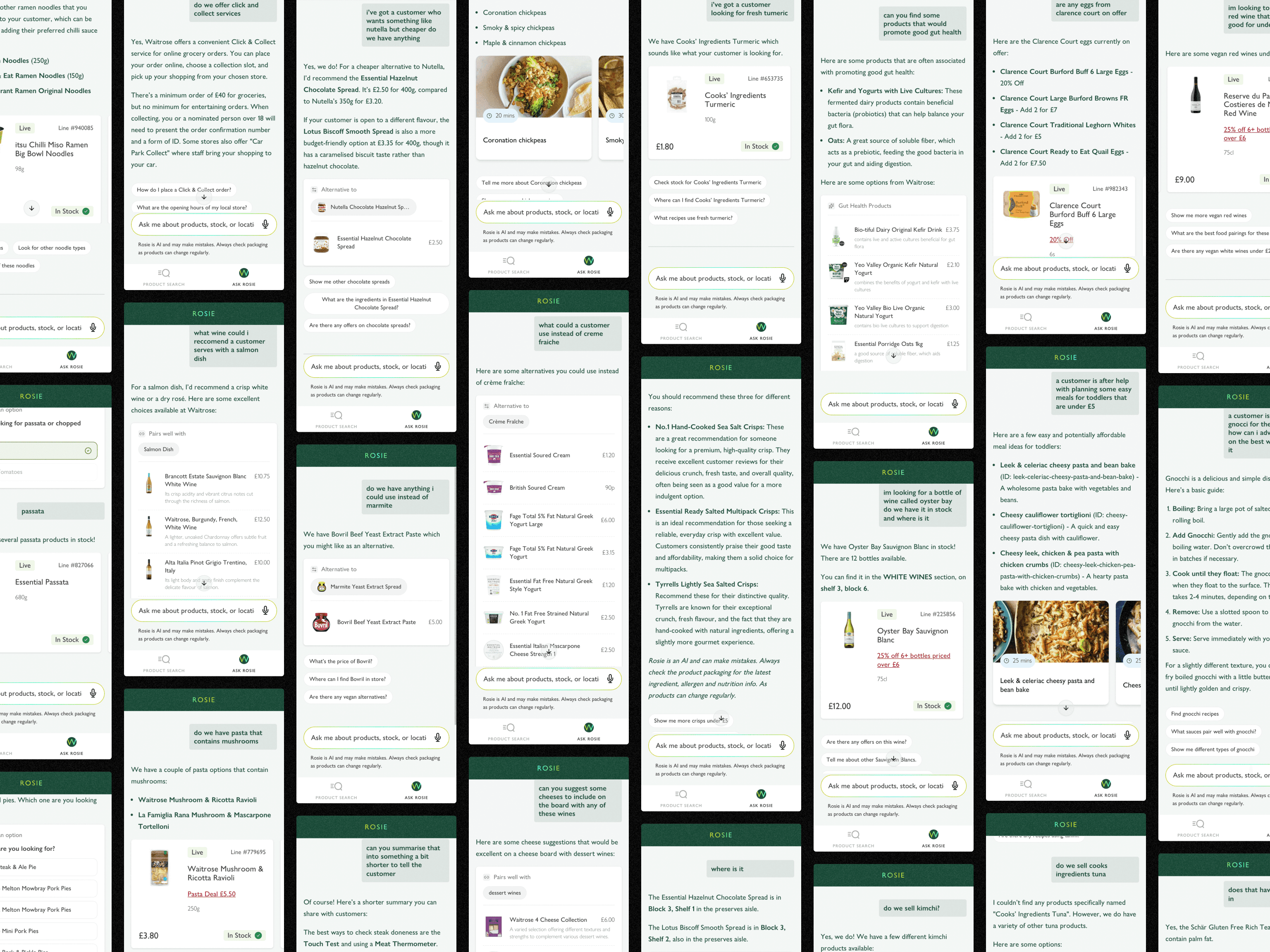
Following early Partner feedback and discovery workshops, I rapidly explored a range of UI concepts and interaction flows to help define how Rosie could support real retail workflows within Product+. Much of the early design process focused on translating emerging AI behaviours into interfaces that felt approachable, lightweight, and easy to navigate across both headset and handheld experiences.
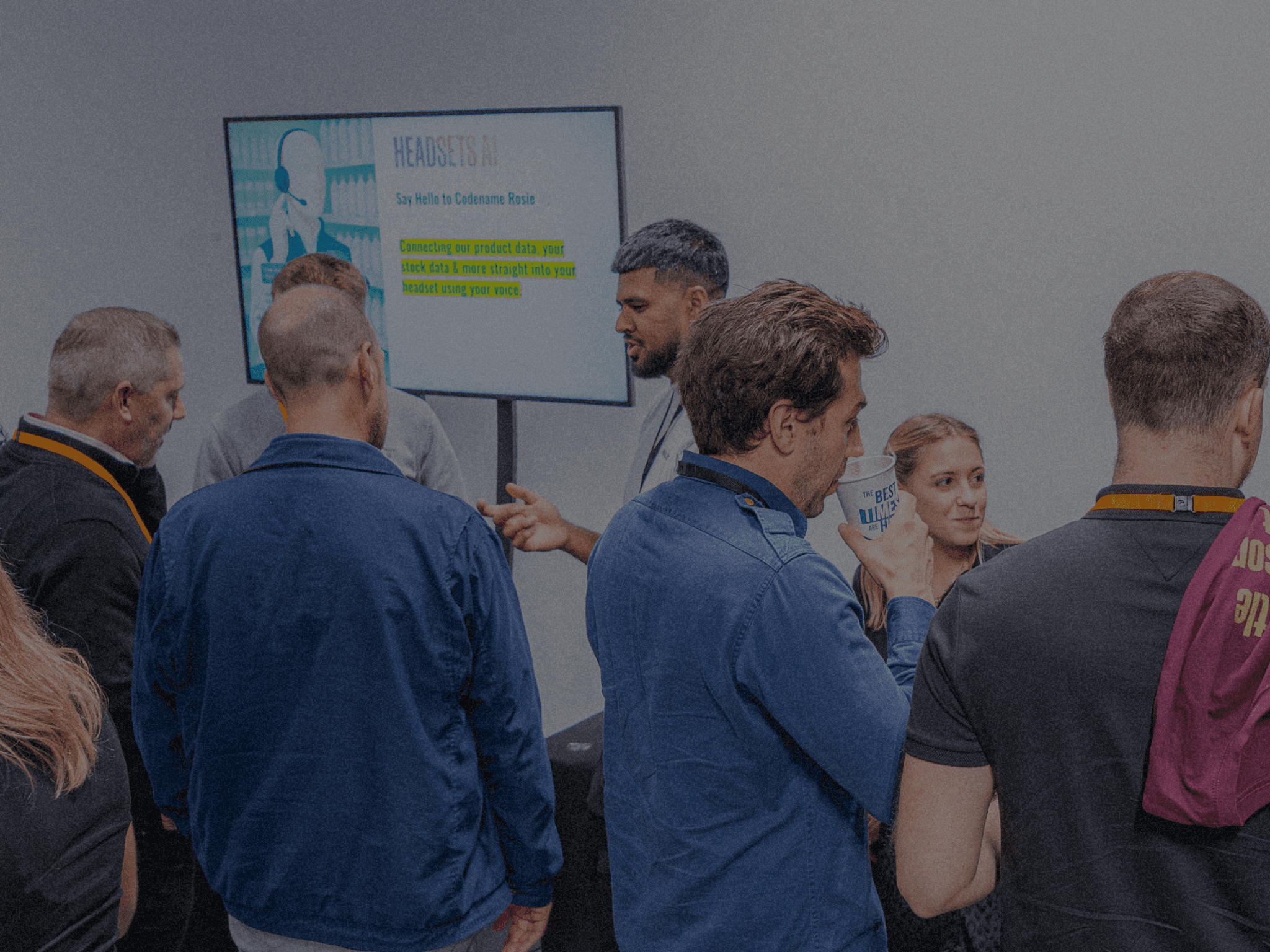
A few weeks after joining the project, I designed and built an early Rosie prototype used to help showcase the vision for AI-assisted retail experiences at the annual Waitrose Retail Conference. Alongside members of the Frog and Capgemini team, we presented the headset functionality and conversational workflows to retail Partners, generating strong engagement and excitement around how Rosie could support day-to-day store operations.
Beyond the product UX and UI, I also developed Rosie’s early visual identity and internal launch campaign to help communicate the future vision of AI-assisted retail experiences within Waitrose. This included creating Rosie’s branding, colour system, presentation materials, and a teaser video produced entirely in After Effects, helping transform the concept into something stakeholders and Partners could emotionally connect with. Shared across internal presentations and the Waitrose intranet, the campaign generated strong engagement and excitement around Rosie and the wider Product+ vision.
Results
ROSIE established a scalable foundation for AI-assisted retail interactions across voice and visual interfaces, helping define how conversational support could integrate into real operational store environments. The rollout into concept stores generated strong engagement from stakeholders and positive Partner feedback around accessibility, usability, and quicker access to operational information during customer interactions. Beyond the product experience itself, the project also helped create internal excitement around the future of AI within Waitrose through launch materials, presentations, and motion-led storytelling shared across the business. From a UX and UI perspective, the project demonstrated my ability to lead complex AI-driven experiences across interaction design, visual systems, rapid prototyping, stakeholder communication, and internal product storytelling. From a business perspective, Rosie helped establish a long-term framework for continuous iteration, behavioural learning, and future AI-assisted retail innovation within Waitrose.
ROSIE is Waitrose’s first user-facing AI retail assistants, designed to support Partners through voice-first interactions in live store environments.
Company
Waitrose & Partners
Timeline
2025 -
2026
Role
As the primary UX/UI designer, I led the product experience from concept to rollout.
Project overview
ROSIE is Waitrose & Partners’ first AI-powered retail assistant, designed to support in-store Partners through voice-first and visual interactions across headset and handheld experiences. As the Senior Product Designer and primary UX/UI designer on the project, I led the end-to-end experience across interaction design, UI design, prototyping, stakeholder presentations, and internal launch materials used to communicate the vision across the business. Working closely with UX researchers, stakeholders, and Frog; part of Capgemini Invent, I helped shape how AI-assisted retail support could integrate naturally into real store environments. Rosie was initially introduced as part of the wider Product+ ecosystem before evolving into a more defined AI assistant experience focused on operational support, product discovery, and reducing friction during customer interactions. The experience has since been released into selected concept stores, with continued iteration informed by real Partner feedback and in-store usage.
Challenges
Designing Rosie meant balancing emerging AI interaction patterns with the realities of fast-paced retail environments where speed, clarity, and usability were critical. Research and Partner feedback highlighted concerns around trust, interruption, accessibility, and how conversational AI could integrate naturally into existing workflows without overwhelming users.
While Frog and Capgemini helped shape elements of the voice architecture, my role focused on translating these behaviours into approachable UX and UI patterns that felt intuitive across both headset and handheld experiences. Much of the early design process involved rapidly exploring interaction models, conversational flows, and visual directions to help stakeholders visualise how Rosie could evolve within the wider Product+ ecosystem. As the primary internal designer working alongside Frog and Capgemini, I also helped ensure Rosie’s UX, UI, and visual identity remained authentic to the Waitrose brand while balancing the introduction of emerging AI interaction patterns.
To help shape Rosie’s interaction model, I analysed a range of emerging AI assistants and conversational products to better understand common UX behaviours, onboarding patterns, and multimodal interaction approaches. These references helped inform how Rosie could feel approachable, lightweight, and operationally useful within a retail environment.
Following early Partner feedback and discovery workshops, I rapidly explored a range of UI concepts and interaction flows to help define how Rosie could support real retail workflows within Product+. Much of the early design process focused on translating emerging AI behaviours into interfaces that felt approachable, lightweight, and easy to navigate across both headset and handheld experiences.
A few weeks after joining the project, I designed and built an early Rosie prototype used to help showcase the vision for AI-assisted retail experiences at the annual Waitrose Retail Conference. Alongside members of the Frog and Capgemini team, we presented the headset functionality and conversational workflows to retail Partners, generating strong engagement and excitement around how Rosie could support day-to-day store operations.
Beyond the product UX and UI, I also developed Rosie’s early visual identity and internal launch campaign to help communicate the future vision of AI-assisted retail experiences within Waitrose. This included creating Rosie’s branding, colour system, presentation materials, and a teaser video produced entirely in After Effects, helping transform the concept into something stakeholders and Partners could emotionally connect with. Shared across internal presentations and the Waitrose intranet, the campaign generated strong engagement and excitement around Rosie and the wider Product+ vision.
Results
ROSIE established a scalable foundation for AI-assisted retail interactions across voice and visual interfaces, helping define how conversational support could integrate into real operational store environments. The rollout into concept stores generated strong engagement from stakeholders and positive Partner feedback around accessibility, usability, and quicker access to operational information during customer interactions. Beyond the product experience itself, the project also helped create internal excitement around the future of AI within Waitrose through launch materials, presentations, and motion-led storytelling shared across the business. From a UX and UI perspective, the project demonstrated my ability to lead complex AI-driven experiences across interaction design, visual systems, rapid prototyping, stakeholder communication, and internal product storytelling. From a business perspective, Rosie helped establish a long-term framework for continuous iteration, behavioural learning, and future AI-assisted retail innovation within Waitrose.